Prostate & BPH
Understand BPH without getting stuck in jargon.
BPH stands for benign prostate enlargement. This page collects the basics: anatomy, growth, and why typical changes in urination can follow.
BPH explained simply
Why the prostate influences urine flow.
The prostate sits right below the bladder, around the start of the urethra. As it grows with age, it can narrow the outflow.
- 1Kidney - urine is produced
- 2Bladder - collects urine
- 3Enlarged prostate
- 4Narrowed urethra
Size over a lifetime
Between roughly 20 and 70 years, the prostate can grow several-fold in volume. That's normal, but often only noticed when the stream weakens or nights get restless.
BPH stands for benign enlargement. Benign means: not cancer. It can still cause symptoms: weaker stream, hesitancy, nighttime urination.
Medical context
BPH is common. What matters is what it does to the bladder and urethra.
BPH means benign prostatic hyperplasia, a non-cancerous enlargement of the prostate. The tissue usually grows slowly in the transition zone, exactly where the urethra passes through the gland.
This can cause typical LUTS: trouble urinating, weak stream, frequent urgency, dribbling, or the feeling that urine remains in the bladder.
Streamcheck does not look at these symptoms in isolation. Flow, trends, IPSS assessment, and relevant urine or prostate signals create a clearer picture, especially when changes become visible over weeks.
Important to know
Benign does not mean irrelevant: BPH is not prostate cancer, but it can significantly affect daily life and bladder emptying.
Urine flow becomes weaker or interrupted.
Nocturia: you need to use the bathroom more often at night.
Uroflowmetry, IPSS, urine values, and PSA help with interpretation.
From understanding to observing
Streamcheck makes changes visible.
When urination changes, trends and objective measurements help put gut feeling into context.
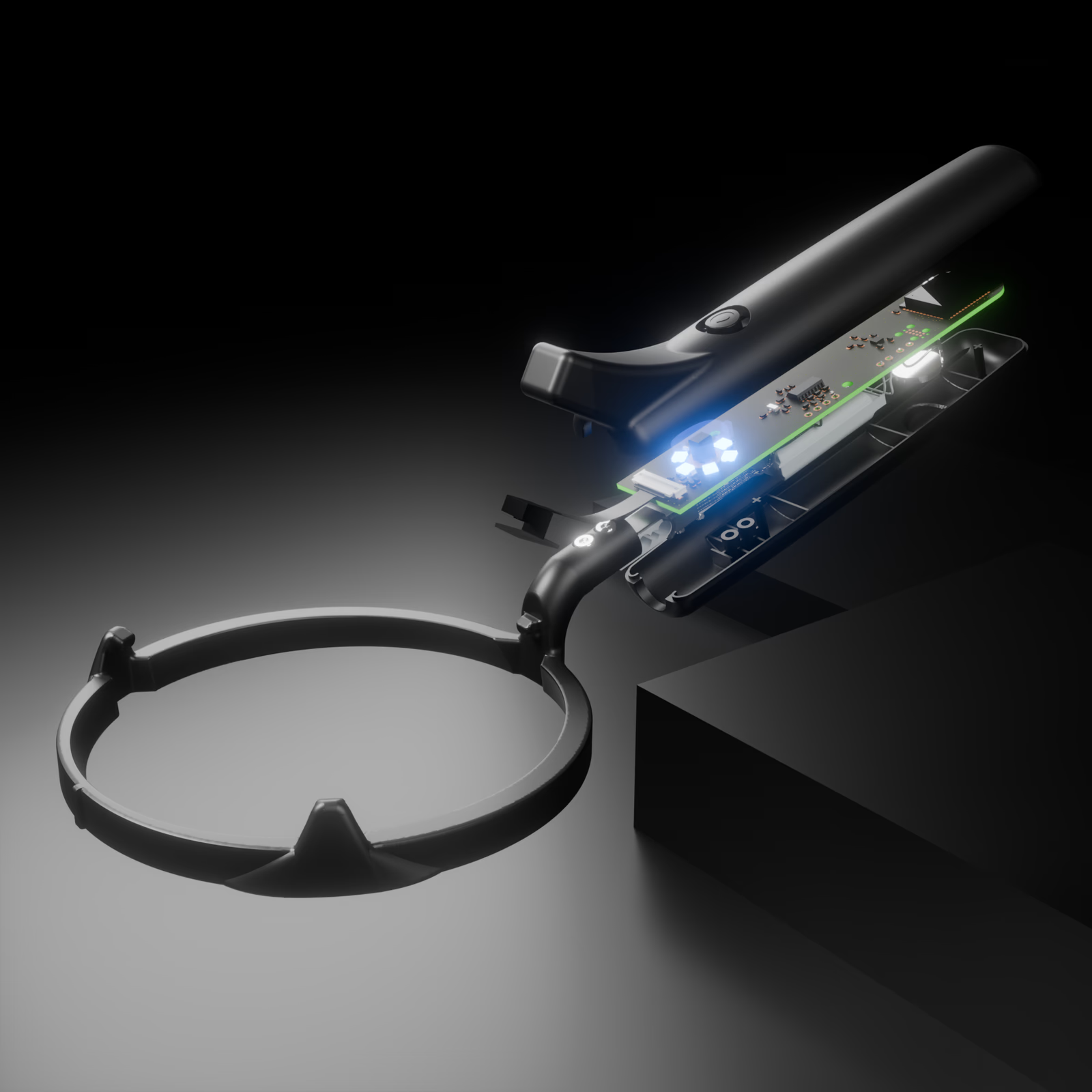
Streamcheck system
Measure flow, biomarkers and trends at home.
A certified medical device — engineered in Germany, made for men who want to recognize changes earlier.
- Add objective measurements to your IPSS assessment.
- Observe whether your urine flow changes over time.
- Prepare doctor conversations with more concrete data.
Keep exploring
You do not have to stop here.
Pick where to go next.